
Ministerial meeting discusses draft indicative import budget for 2026.

Ministerial meeting discusses draft indicative import budget for 2026.

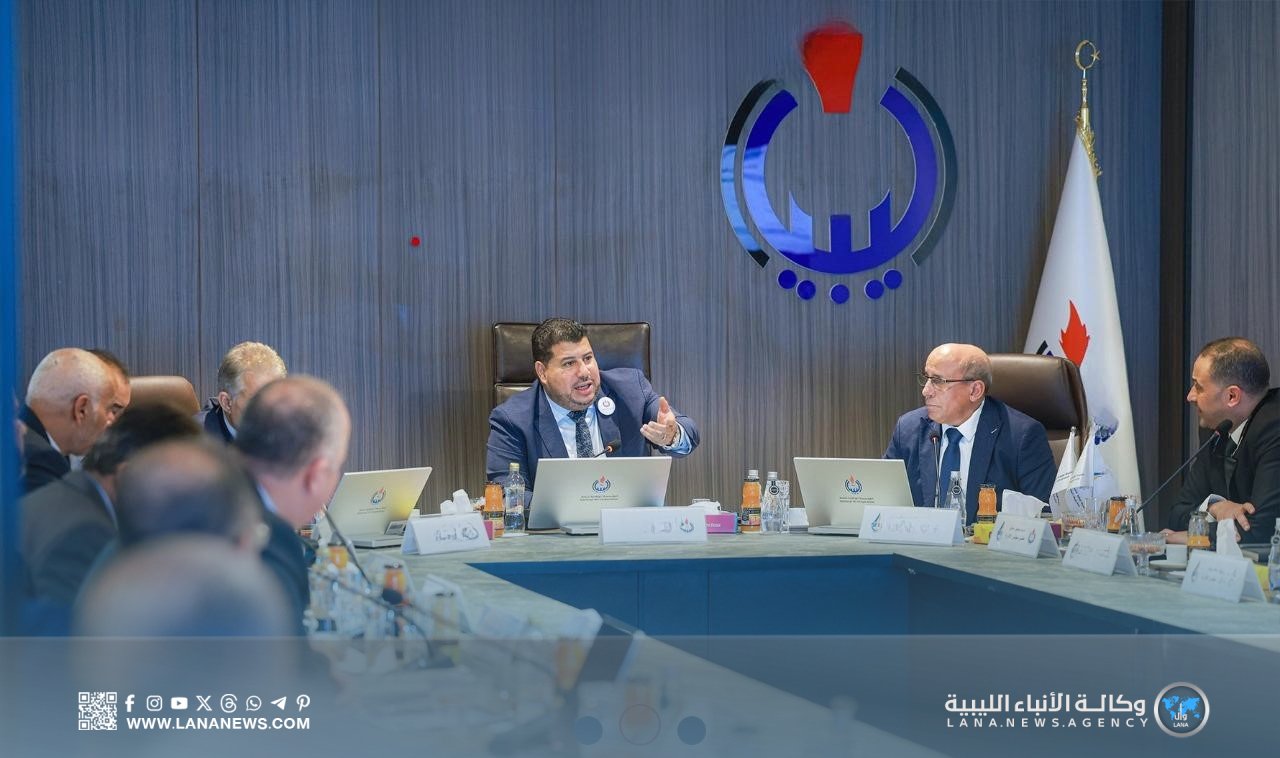
Tripoli, December 18, 2025 — An expanded ministerial meeting was held at the headquarters of the Ministry of Economy and Trade. The meeting brought together the Minister of Economy and Trade and the Minister of Planning to discuss the draft indicative import budget for the state for the year 2026.

The meeting, which was attended by undersecretaries of both ministries and directors of relevant departments, reviewed the import budget framework and mechanisms for regulating imports according to the priorities of the national economy.

The Minister of Economy emphasized that this budget is a strategic tool for rationalizing imports, controlling the demand for foreign currency, and protecting national industries, which ensures price stability and aligns them with citizens’ purchasing power.

For his part, the Minister of Planning revealed the completion of a comprehensive national survey on Libyan household consumption and spending patterns, carried out by the Statistics and Census Authority. He explained that the results of this survey will be the primary reference for formulating public policies related to commodity subsidies, wage determination, and public budget planning, to ensure economic decisions are based on accurate and realistic data.

The attendees stressed the importance of integration between the Ministries of Economy and Planning with the Central Bank of Libya to align monetary and trade policies.

The Undersecretary of the Ministry of Economy pointed out that using the banking system as a tool to control financial flows will enhance transparency and limit imbalances in the local market.

At the conclusion of the meeting, the Minister of Economy directed the necessity of completing the project according to the specified timeline, while emphasizing the simplification of import procedures for suppliers compliant with laws. This serves the government’s plan to enhance food and economic security for the Libyan consumer.
347464

Tripoli

Tripoli is the capital and largest city of Libya, with a history dating back to the 7th century BC when it was founded by the Phoenicians. It later came under Roman, Byzantine, Arab, Ottoman, and Italian rule, which is reflected in its historic architecture, such as the old Medina and the Red Castle (Assaraya al-Hamra).

Ministry of Economy and Trade

The Ministry of Economy and Trade is a governmental department typically responsible for formulating and implementing national economic and commercial policy. Its history is generally tied to the modern development of the state it serves, often established to centralize and regulate economic planning, trade agreements, and industrial growth.

Ministry of Planning

The Ministry of Planning is a government department responsible for formulating national economic and social development plans. Its history is often tied to the mid-20th century rise of centralized economic planning in many countries, aimed at guiding industrialization and resource allocation.

Statistics and Census Authority

The Statistics and Census Authority is a governmental body responsible for collecting, analyzing, and disseminating official national statistics and demographic data. Its history is typically tied to a country’s modernization efforts, often established to provide reliable data for economic planning and public policy. These authorities conduct regular population censuses and surveys that are fundamental for understanding societal trends and guiding national development.

Central Bank of Libya

The Central Bank of Libya is the primary monetary authority of Libya, originally established in 1956 following the country’s independence. It has played a critical and often contentious role in the nation’s economy, particularly during and after the 2011 civil war, when rival governments in the east and west claimed control over separate branches of the institution.

Tripoli, December 18, 2025 — An expanded ministerial meeting was held at the headquarters of the Ministry of Economy and Trade. The meeting brought together the Minister of Economy and Trade and the Minister of Planning to discuss the draft indicative import budget for the state for the year 2026.

The meeting, which was attended by undersecretaries of both ministries and directors of relevant departments, reviewed the import budget framework and mechanisms for regulating imports according to the priorities of the national economy.

The Minister of Economy emphasized that this budget is a strategic tool for rationalizing imports, controlling the demand for foreign currency, and protecting national industries, which ensures price stability and aligns them with citizens’ purchasing power.

For his part, the Minister of Planning revealed the completion of a comprehensive national survey on Libyan household consumption and spending patterns, carried out by the Statistics and Census Authority. He explained that the results of this survey will be the primary reference for formulating public policies related to commodity subsidies, wage determination, and public budget planning, to ensure economic decisions are based on accurate and realistic data.

The attendees stressed the importance of integration between the Ministries of Economy and Planning with the Central Bank of Libya to align monetary and trade policies.

The Undersecretary of the Ministry of Economy pointed out that using the banking system as a tool to control financial flows will enhance transparency and limit imbalances in the local market.

At the conclusion of the meeting, the Minister of Economy directed the necessity of completing the project according to the specified timeline, while emphasizing the simplification of import procedures for suppliers compliant with laws. This serves the government’s plan to enhance food and economic security for the Libyan consumer.

347464

Tripoli

Tripoli is the capital and largest city of Libya, with a history dating back to the 7th century BC when it was founded by the Phoenicians. It later came under Roman, Byzantine, Arab, Ottoman, and Italian rule, which is reflected in its historic architecture, such as the old Medina and the Red Castle (Assaraya al-Hamra).

Ministry of Economy and Trade

The Ministry of Economy and Trade is a governmental department typically responsible for formulating and implementing national economic and commercial policy. Its history is generally tied to the modern development of the state it serves, often established to centralize and regulate economic planning, trade agreements, and industrial growth.

Ministry of Planning

The Ministry of Planning is a government department responsible for formulating national economic and social development plans. Its history is often tied to the mid-20th century rise of centralized economic planning in many countries, aimed at guiding industrialization and resource allocation.

Statistics and Census Authority

The Statistics and Census Authority is a governmental body responsible for collecting, analyzing, and disseminating official national statistics and demographic data. Its history is typically tied to a country’s modernization efforts, often established to provide reliable data for economic planning and public policy. These authorities conduct regular population censuses and surveys that are fundamental for understanding societal trends and guiding national development.

Central Bank of Libya

The Central Bank of Libya is the primary monetary authority of Libya, originally established in 1956 following the country’s independence. It has played a critical and often contentious role in the nation’s economy, particularly during and after the 2011 civil war, when rival governments in the east and west claimed control over separate branches of the institution.

Спасибо!

Мы проверили новость, не смогли определить, направили на модерацию